November 2026 Director's Journal
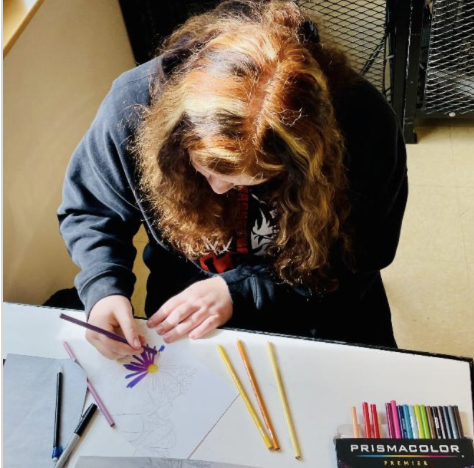
“A butterfly effect is when something small goes on to make a big change,” offers a front-row student in Nestucca High’s elective on Oregon’s coastal tourism and hospitality industry.
At Sitka, we think about small footprints and big impacts all the time.
What opens up for an artist given time and space in residency to take risks and make new work? How do young people’s curiosity and creativity take root when art is part of the school day? On our nature preserve, how might a small nonprofit play a meaningful role in protecting the threatened Oregon silverspot butterfly?
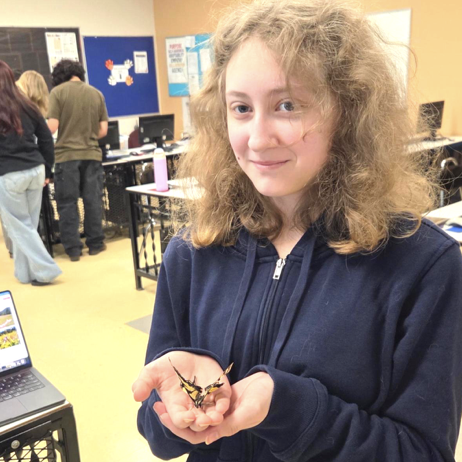
Nestucca High offers the course in collaboration with the Tillamook Coast Visitors Association, and Sitka was invited to share how our operations compare with the for-profit businesses students will visit later this fall. “During residency season, we’re essentially a nonprofit hotel for artists and scientists, where our guests stay for free,” we explain on our first visit. “And in summer, people travel from all over to take and teach art, writing and ecology workshops at Sitka.”
Rather than tell students about workshop season, Youth Program Director Leeauna Perry and Facilities and Ecology Director Jake Simondet show them, leading a two-part scientific illustration workshop featuring Oregon butterflies and the native plants that support their life cycles.
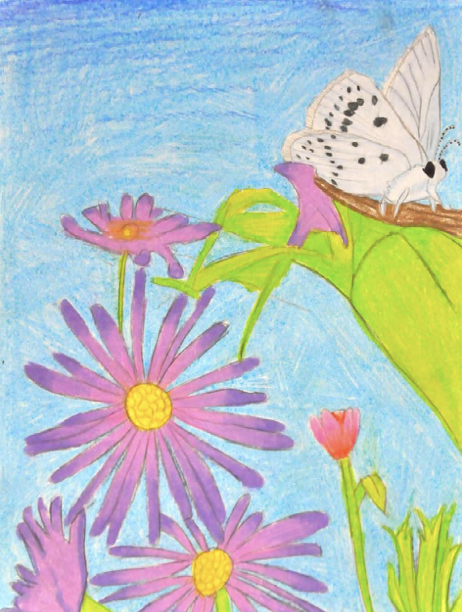
Just as in Sitka’s studios, an immersive hush settles over the room as the students begin to draw.
While they work, I read Ray Bradbury’s 1952 short story “A Sound of Thunder” aloud. It’s about a time-traveling dinosaur safari that runs amok when a tourist strays off a levitating path and steps on a butterfly, changing history. Two decades later, meteorologist Edward Lorenz would give the idea its scientific name: the butterfly effect.
“The jungle was wide and full of twitterings, rustlings, murmurs, and sights. Suddenly it all ceased, as if someone had shut a door. A sound of thunder. Out of the mist, one hundred yards away…”
I close the book just as the Tyrannosaurus enters, and I promise part two next week.
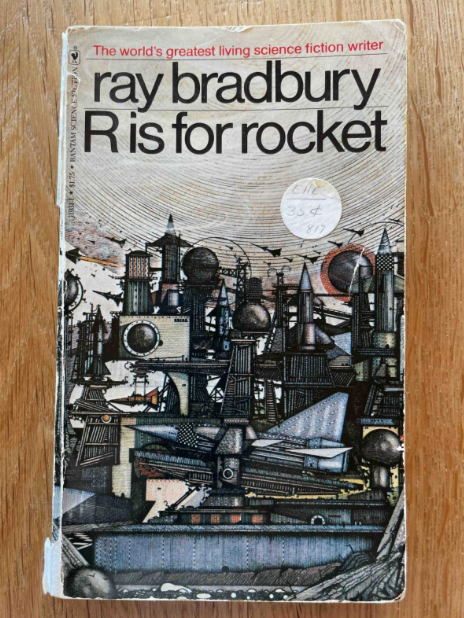
Reading aloud for pleasure, I think of my parents. We didn’t have much money when I was growing up, but my dad read Bradbury aloud with Halloween glee, and our home, and the alternative school where they both taught, were never short on art supplies or time to play outside. With K-8 Create now in its seventh year, many of these high school students grew up with the program. I hope access to art, and to grownups who care about the creative lives of young people, strike similar sparks for them.
The following week, Jake previews our habitat restoration project, students add details to their drawings, and the Tyrannosaurus finally gets its scene.
In the course’s third week, the class spends the day at Sitka, meeting mushroom dye expert Julie Beeler, interviewing our staff about their work and career paths, and then following Jake to to the preserve, growing more curious and talkative the more time they spend outside. Jake’s fall journal installment, included in this newsletter, picks up the field trip from there.
Thank you to Assistant Director Nicola Harrison, who encouraged our team to make time for local teens in our busiest season, and to everyone at Sitka who works behind the scenes, readying studios, troubleshooting water heaters, deep cleaning apartments and answering every call, so that each visitor feels they’ve discovered an enchanted place in the woods made just for them.
Thank you, also, to everyone whose year-end generosity sustains Sitka’s programs and the teamwork behind them. Sitka’s magic is no accident. It’s a butterfly effect our community sets in motion every day.
With gratitude,
Alison
- Journals
- Uncategorized