Description
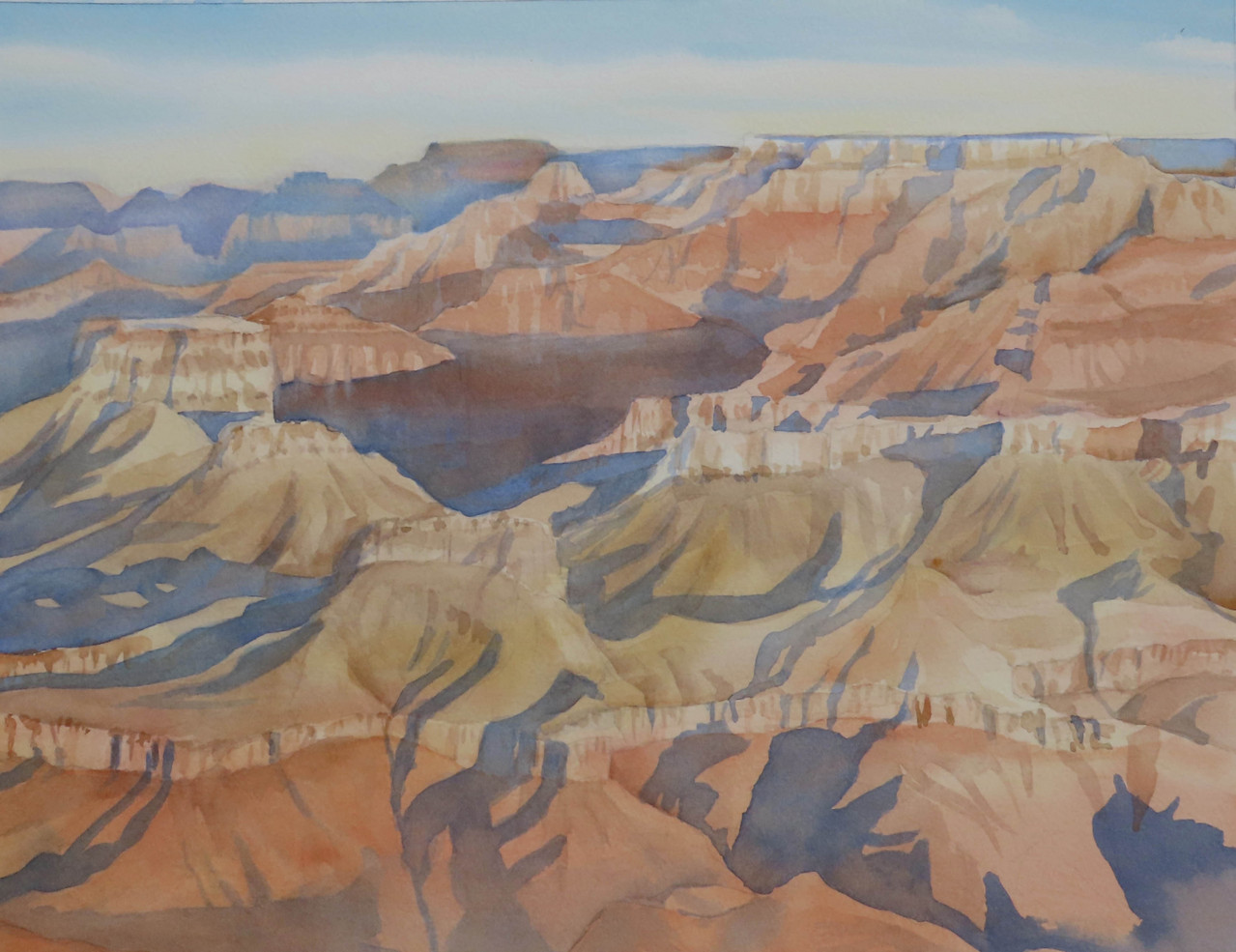
Learn how to represent the many landscapes of the west with watercolor and watermedia. We’ll study coastal forests, canyonlands, grasslands, deserts and alpine habitats. You will discover ways to simplify subjects, like eroded canyons and cliffs, adding texture when plants and rocky slopes require it.We’ll work loosely with sketchbook media, and continue to more finished watercolors. Diverse cloud forms and skies will serve as the grounds for our finished watercolors, which we will build, often layer by layer.
About the Instructor
She is a watercolor artist, illustrator and printmaker, and her work has been published for many years by Pomegranate Communications. She is the author and illustrator of five titles for Mountaineers Books, Colors of the West, Mt. Rainier: An Artist’s Tour, Birds of the West, Trees of the West, and the newly released Wildflowers of the West. She is at work on a new title about the west for Mountainners Books; release date will be 2027.
Learn More
www.mollyhashimoto.com
Materials List
You will need to bring:
Complete Watercolor Supply List (includes compact kit for Plein Air Painting)
Revised August 2025 Molly Hashimoto, Instructor
Email for questions: mollyhashimoto@comcast.net
This very comprehensive 3 part list is designed to accommodate different needs and different budgets, so take a look and buy what fits your needs best.
1. Very Lightweight and Portable Plein Air Painting, Suitable for Hiking and Traveling and Quick Sketches:
Ziploc Bag with the following:
HB Pencil and plastic eraser
The smallest possible watercolor paint set filled with pans or cakes of watercolor:
Some possibilities: Van Gogh Watercolor Pocket Box, Sennelier Bijoux Watercolor Set, Winsor and Newton either Cotman (inexpensive) or Winsor Artist Quality (expensive) all of these make very small sets. The price varies depending on the quality of the paint used. You can decide how important the paint quality is to you. For lowest cost, a Prang student set works.
#4 and #6 round watercolor brushes, ¾” flat brush, ½” flat brush
Water and water container, plus empty bottle for discarding paint water.
140 lb. cold press 100% rag Arches paper, available in single sheets which you can cut to size you need: bring a lightweight board and clips or a rubber band to secure paper. You can also make your own Arches sketchbook—FedEX Office will spiral bind the paper for you and you can cut it to your preferred size. Other choices Hahnemuhle 100% rag bound sketchbooks—paper is not sized so a little harder to work on than Arches, but still a good choice. Also: Stillman and Birn sketchbooks (not 100% rag).. Try the ones for mixed media or wash.
Paper towel or rag.
Optional: watersoluble pens and pencils.
2. Heavier Weight Plein Air Painting, Suitable for Longer Periods of Outdoor Painting:
Portable easel
If you prefer sitting: a portable lightweight chair, plus a small table or camp stool on which to place palette, water and brushes, or a sit pad for working on the ground.
Drawing pencil HB (for watercolor undersketches)
Artist eraser, white Mars plastic (made by Staedtler)
Paper: Arches 140 lb. cold press watercolor paper, 100% rag cut to your preferred size for painting. Check out the new horizontal and square format blocks, too. See above for other sketchbook choices.
Lightweight board for paper mounting for ease of painting if you use single sheets with clips or rubber bands.
Brushes: Sable or sable/synthetic blend watercolor brushes: #6, and #4 round, ¾” flat.
Other sizes and types are optional. Synthetics are fine for #4 and smaller sizes. I like Da Vinci Maestro sable rounds (series 35) the best, but they are expensive. A sable/synthetic blend works well and is cheaper. Other brushes I like using are smaller flat brushes with chisel edges (which are useful for softening edges, and lifting out), riggers or liners for small line work.
Water and water containers or waterbrushes
Old plastic water bottle for discarding dirty paint water safely
Palette: Alvin 18 pan with blue waterproof seal, filled with tube paints listed below in Studio Paints: Warm/Cool primaries: I use Daniel Smith watercolors
Reds: Cool: permanent alizarin crimson
Warm: pyrrol scarlet
Blues: Cool: phthalo blue (green shade)
Warm: phthalo blue (red shade) or French ultramarine blue or ultramarine blue
Yellows: Cool: hansa yellow light
Warm: hansa yellow medium
Additional colors: Violet: carbazole violet
Browns and golds: quinacridone burnt orange, yellow ochre or raw sienna (you can substitute burnt umber or burnt sienna for the quinacridone burnt orange).
Other colors you may want to add, in order of their usefulness: cobalt blue, hansa yellow deep or new gamboge, perylene green, pyrrol orange, indanthrone blue, Winsor and Newton permanent white gouache
Fall Color: quinacridone magenta, pyrrol orange, hansa yellow deep
Paper towels, rags
3. For Studio or Classroom Painting:
Drawing pencil HB (for watercolor undersketches)
Artist eraser, white Mars plastic (made by Staedtler)
Arches 140 lb. cold press watercolor paper, in single sheets 22 X 30: cut to preferred size for your painting. It’s also available in blocks: 7” X 10” or 9” X 12” are good sizes.
Sable or sable/synthetic blend watercolor brushes: #12, #6, and #4 round, ¾” flat.
Other sizes and types are optional. Do not buy a synthetic brush in #12 or #8 size: they are too stiff and do not lay smooth washes. Synthetics are fine for #4 and smaller sizes. I like Da Vinci Maestro sable rounds the best, but they are expensive. A sable/synthetic blend works well and is cheaper. Other brushes I like using are smaller flat brushes with chisel edges (which are useful for softening edges, and lifting out), riggers or liners for small line work.
Required colors–a warm and cool hue of each of the primary colors, plus a few neutrals: Warm means it leans towards red, cool means it leans towards blue (in the primary hue of red, warm means leaning towards orange, cool means leaning towards violet).
Paints: Warm/Cool primaries: I use Daniel Smith watercolors
Reds: Cool: permanent alizarin crimson
Warm: pyrrol scarlet
Blues: Cool: phthalo blue (green shade)
Warm: phthalo blue (red shade) or French ultramarine blue or ultramarine blue
Yellows: Cool: hansa yellow light
Warm: hansa yellow medium
Additional colors: Violet: carbazole violet
Browns and golds: quinacridone burnt orange, yellow ochre or raw sienna (you can substitute burnt umber or burnt sienna for the quinacridone burnt orange).
Other colors you may want to add, in order of their usefulness: cobalt blue, hansa yellow deep or new gamboge, perylene green, pyrrol orange, indanthrone blue, Winsor and Newton permanent white gouache
Fall Color: quinacridone magenta, pyrrol orange, hansa yellow deep
Paper towels, rags
Paint palettes
Provided by instructors:
Watercolor pencils, tube watercolors that are not on the list, some papers