Spring 2026 Ecology Update

- Journals
From the Field Notes of Sitka’s Ecology & Facilities Manager, Jake Simondet
Spring is one of my favorite times of the year. Life emerges from the soil, blossoms beckon to summer and the breeze carries that sweet, unmistakable fragrance of the forest. Bees that began emerging as early as January are now joined by droves of moths and butterflies, all seeking the nectar that keeps insect populations thriving.
The quince and plum blossoms on trees planted by homesteaders on Sitka’s nature preserve have been in full bloom for longer than I can remember in recent years. Their color and fragrance seem to linger with each sunny day. To spend time on this land is a privilege. To share it with others is something more. There’s something remarkable in seeing how different people experience the same place—how curiosity, awe and perspective shift from one person to the next.
Even now, after years of working on this land, I find something new each season: parasitic plants like gnome plant and ghost pipe, mushrooms like cauliflower and reishi or learning that a tree local lore identified as a hickory is actually a common walnut over 120 years old and still producing. We never get to stop learning, and I’m grateful for that.
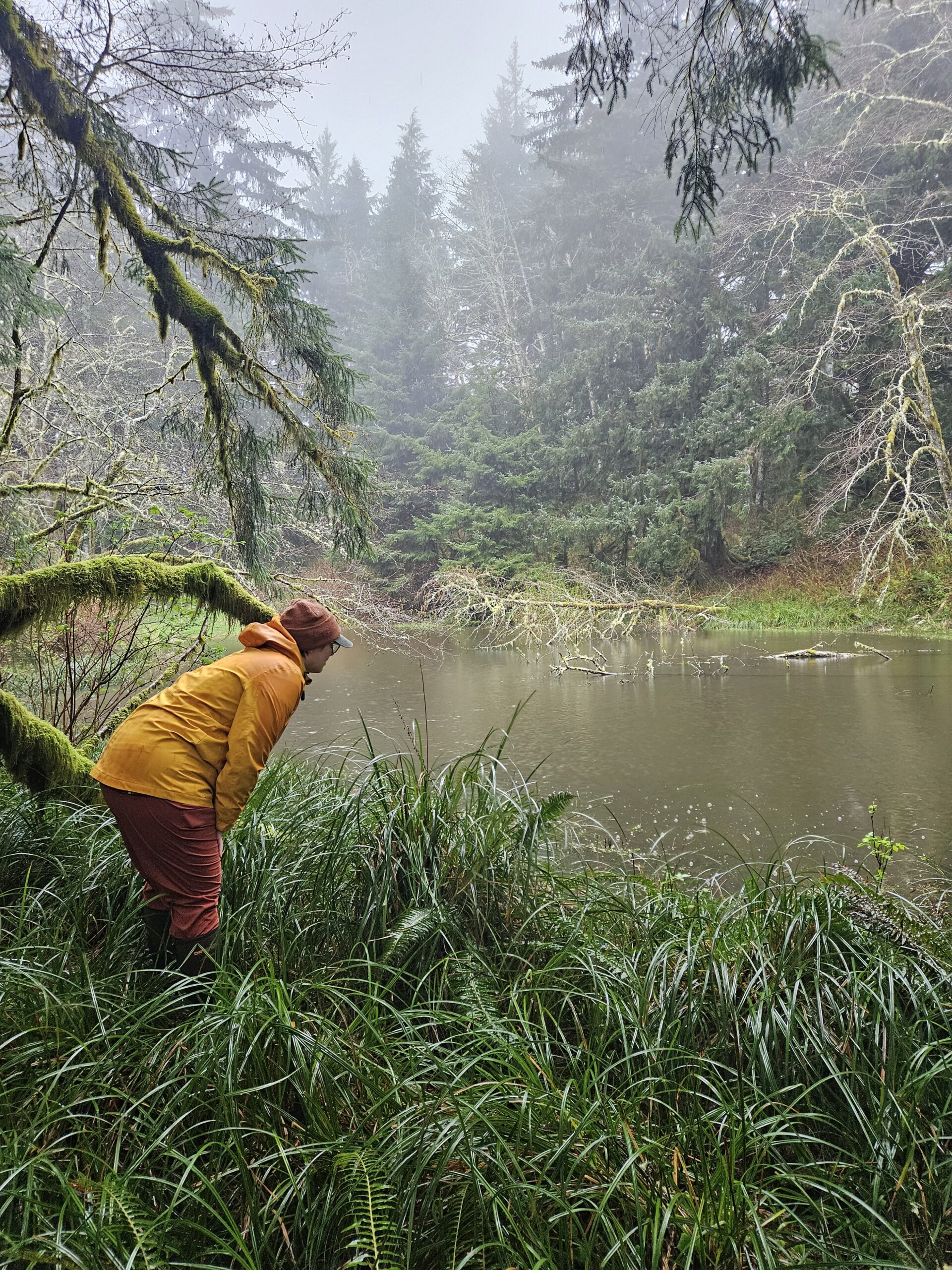
Earlier this spring, I had the opportunity to give an ecology tour to Emily Poole, a visual artist and natural illustrator, with the goal of finding a northwestern salamander. It was the week before the spring equinox, and it was raining hard that morning. As I apologized for the weather, Emily gleefully said, “It’s perfect weather to find salamanders.”
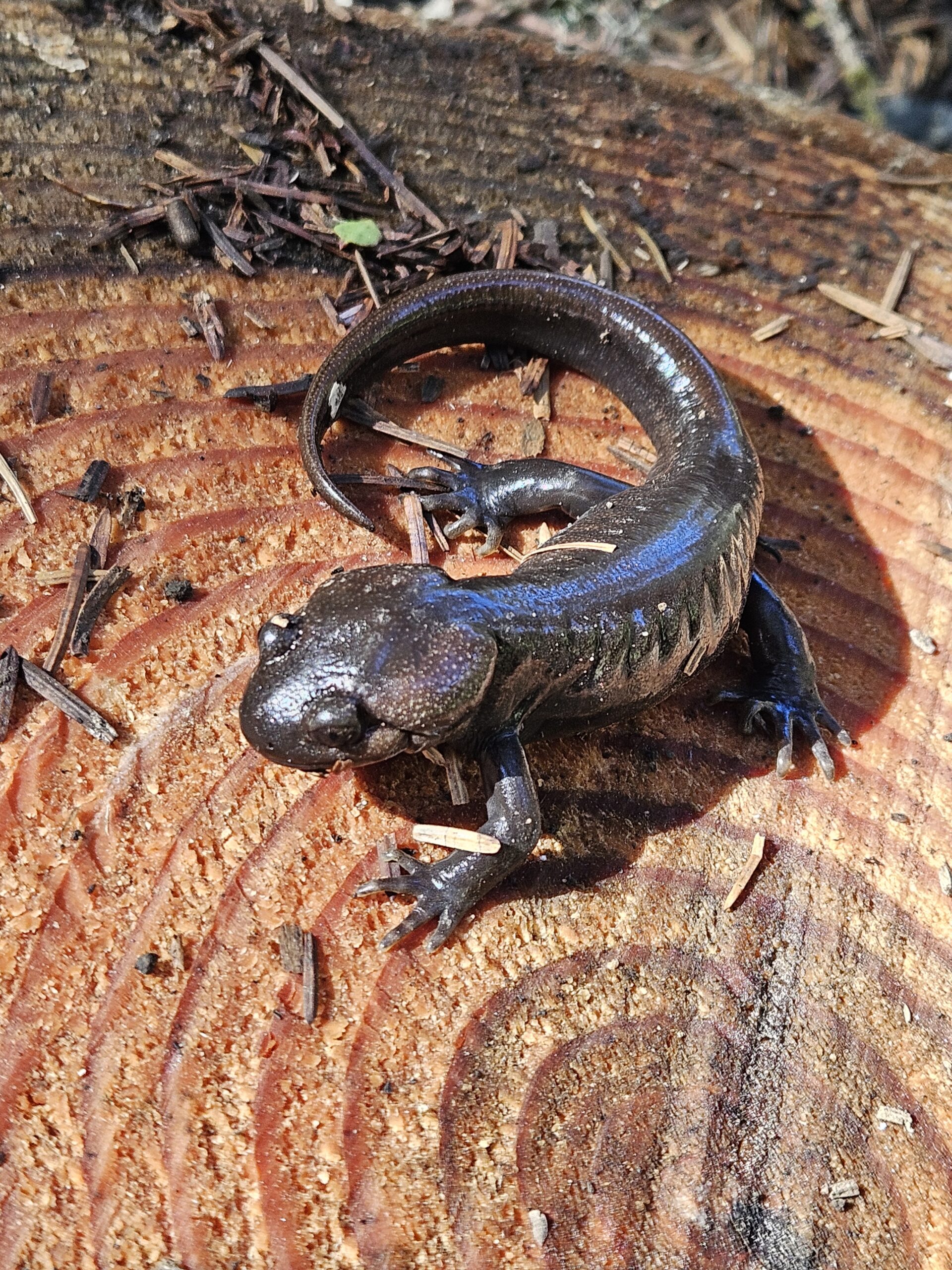
We found rough-skinned newts in their mating cycles in a pond full of what appeared to be northwestern salamander eggs, a good sign to be sure. We also found a red-backed salamander that was melanistic and an ensatina with its small golden “armpits.” But no northwestern salamander.
Feeling disappointed, I apologized for not finding the one species we had set out to see. Emily didn’t seem concerned. “We often find them when we’re not looking,” she said.
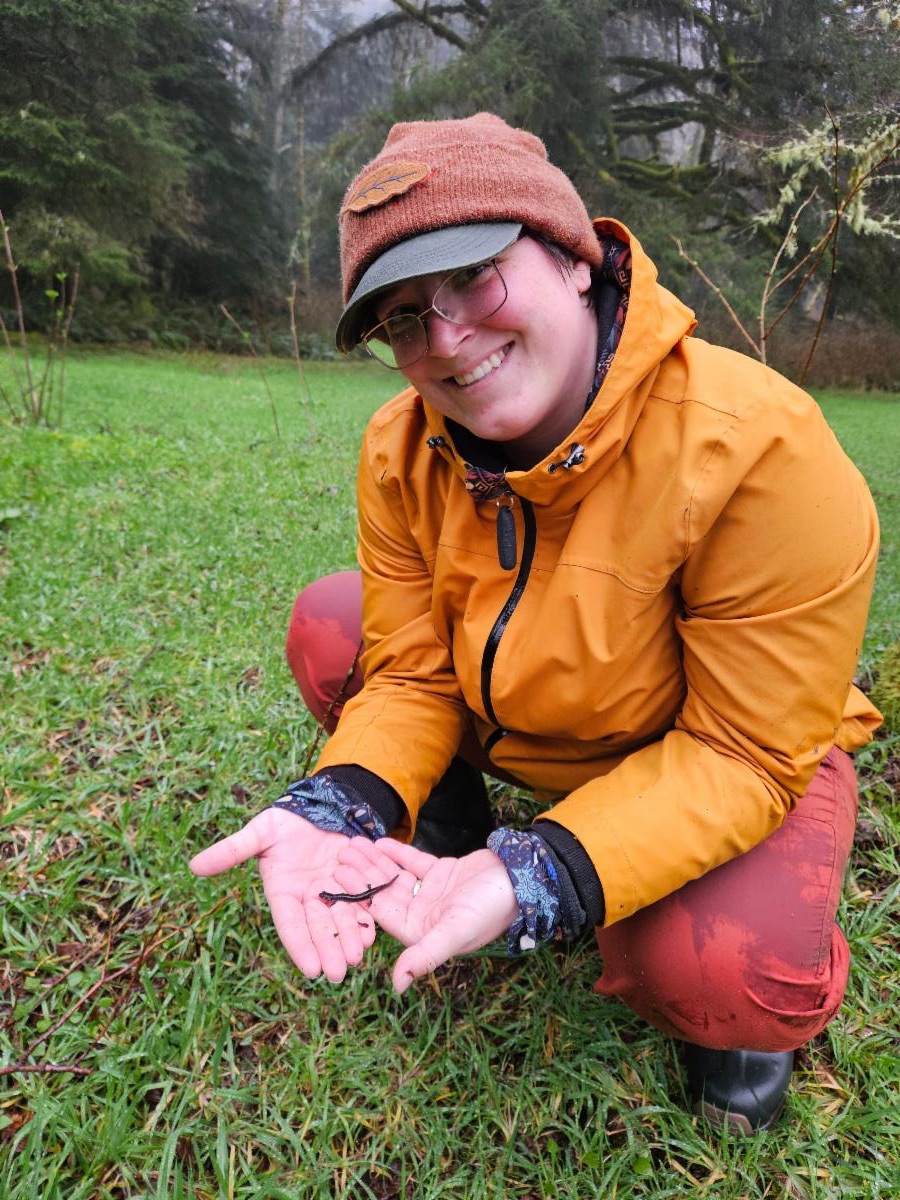 Emily Poole with red-backed salamander | 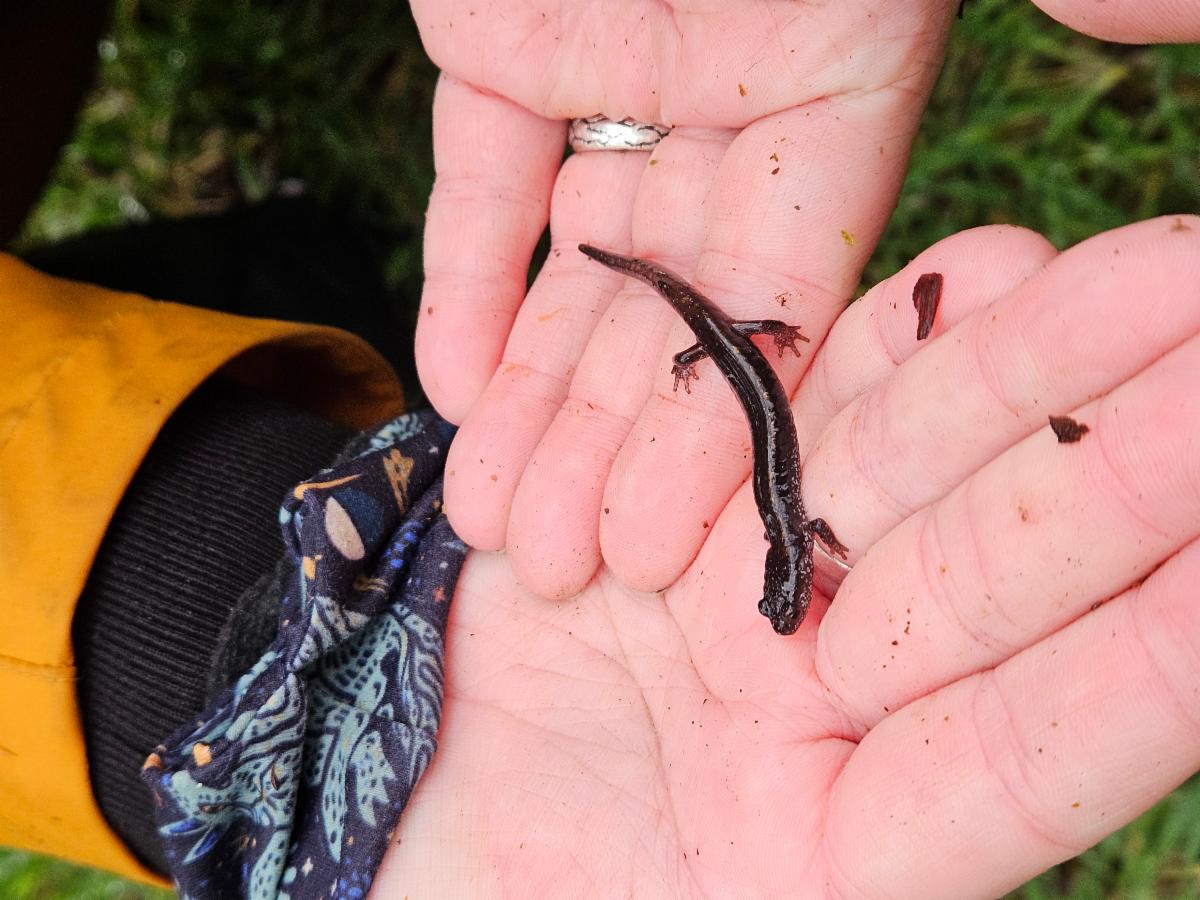 Melanistic red-backed salamander Melanistic red-backed salamander |
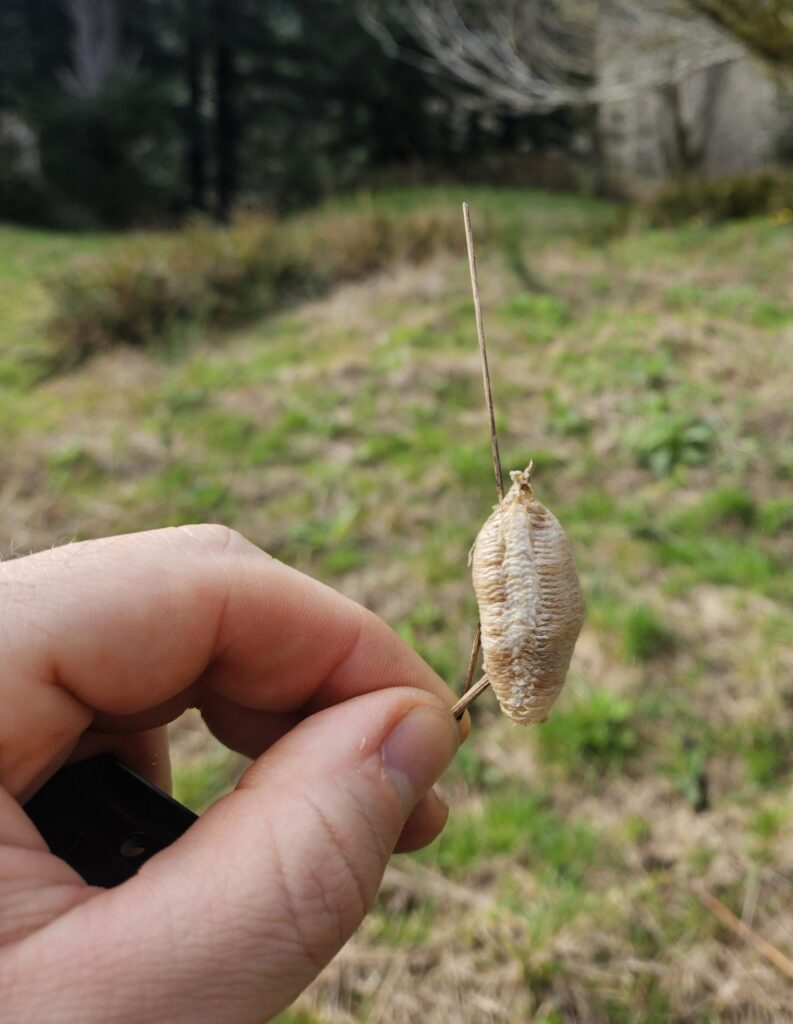
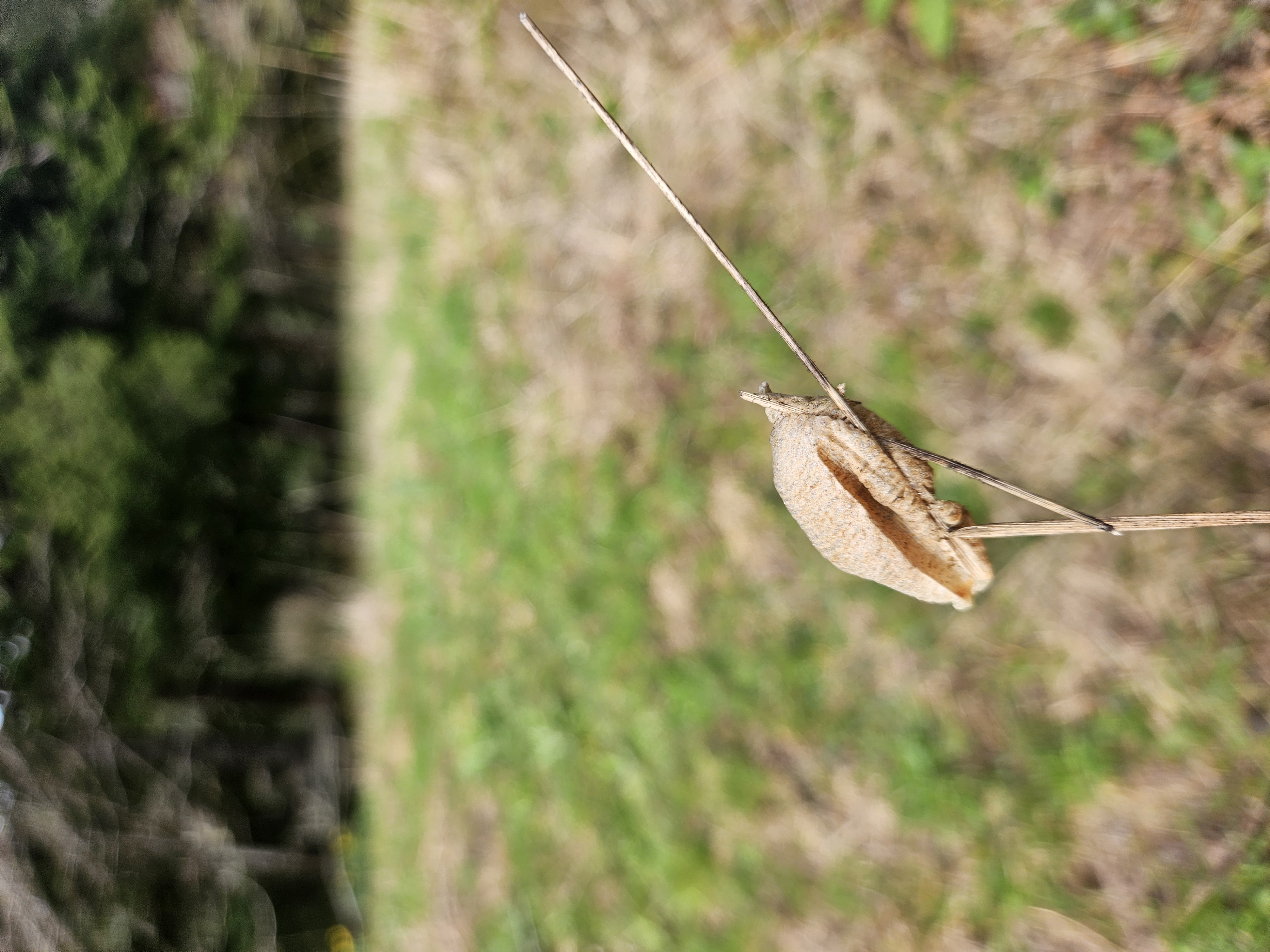
That stuck with me. The following week, while leading an ecology tour with a full cohort of artists, we found a northwestern salamander tucked beneath a wood pile in all its beauty.I was reminded of this again while walking the preserve with Rebecca Lexa, a remarkable naturalist, author and someone who cares deeply for the places she spends time in. It seems like every time we walk together, we find something new. This spring it was a praying mantis egg case, known as an ootheca, papery in appearance but firm, with a ribbon-like texture and almost alien in form. I would have missed it entirely if Rebecca hadn’t pointed it out.“They’re not uncommon here,” she said.
In the decade I’ve lived on the coast, I’ve only seen a few mantises. But that’s one of the things Rebecca has taught me, not just what to look for but how to look. Whether it’s diving into tall grass to gently catch a snake or carefully approaching a western jumping mouse, she moves through the world with curiosity and respect. The biggest takeaway from our time together is simple: slow down and you’ll see more.
Emily and Rebecca’s words stay with me as I think about stewardship here on Cascade Head. We often find what we’re looking for when we stop trying so hard to find it. When we slow down and allow ourselves to notice what’s already here—beauty, wonder and small moments of discovery.
There is always more to see. More to learn.
And always time to stop and smell the flowers.